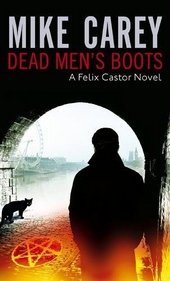
У нас вы сможете в любое время суток открыть и прочесть произведение «Dead Men's s Boots» без единого платежа. На странице представлена не урезанная, а именно целая версия книги — от первой до последней страницы. Если хотите не только читать, но и слушать — пожалуйста, есть аудиоформат. Для тех, кто предпочитает хранить книги у себя на устройстве, работает скачивание через торрент (доступен файл fb2). А если времени в обрез — выручит краткий пересказ содержания. Направление литературы: Легкое чтение, Фэнтези, Городское фэнтези. Там же, ниже по странице, вы найдёте развёрнутую аннотацию, вступление от автора (если оно есть) и настоящие отклики читателей. Наша электронная библиотека живёт и развивается: мы регулярно добавляем новые издания и делаем навигацию удобнее. Всё это превращает наш книжный портал в настоящий дом для тех, кто не представляет жизни без литературы.
Онлайн книга Dead Men's s Boots
Автор
Читать полностью Dead Men's s Boots
Текст произведения «Dead Men's s Boots» удобно распределён по отдельным страницам — так читать гораздо легче. Система автоматически запоминает, где вы остановились, поэтому возвращаться к потерянному абзацу больше не придётся. И всё это совершенно бесплатно. Кроме того, вы вольны сами настроить размер букв и цвет фона — подберите параметры, которые не будут утомлять глаза. Устраивайтесь поудобнее и погружайтесь в любимые истории где угодно: дома на диване, в транспорте или на природе.
Текст книги
I bought a cappuccino for Pomfret and a double espresso for me, adding a packet of crisps as a token gesture towards lunch – or whatever meal my jet-lagged intestines were expecting to receive.
Pomfret took a sip of his coffee, wiped the foam from his upper lip with the back of his thumb, and spread the sheet music out on the table.
‘Okay,’ he said. ‘Can you read ordinary sheet music?’
‘Barely,’ I said. ‘I don’t come across it all that much but I know what all the bits and pieces mean.’
‘Okay. So you’re used to the idea of the stave as a way of indicating a sequence of notes, yeah?’
‘Yeah.
‘Well, in drum music they don’t. Obviously. How could they? So when drum music is done like this, on standard-form music paper, it uses the stave to do something else. Each line stands for a voice – one of the drums in the rig. Top line is high hat. Middle line, or anywhere around it, is the snare drum. Bottom line is the bass. So each of these vertical strokes is just a hit on one of the drums. Unless they’re crossed, like this.
I blinked. It wasn’t that it was so hard to absorb: it was just that I was already being taken in a direction I hadn’t expected to be going. When John Gittings did an exorcism he used a little hand-held tambour: anything more than that would tend to be a bit unwieldy in the field.
‘So this is scored for a whole drum kit?’ I said.
Pomfret nodded. ‘Yeah, most likely. I mean, you can make the lines stand for any assortment of drums: doesn’t have to be high-snare-bass-cymbal.
‘Okay,’ I said, letting the point ride for now. ‘What about all these other marks? Are they letters? That one looks like a T, and that one could be a K. And we’ve got asterisks, Morse-code dots and dashes . . .’
‘That’s frame notation,’ Pomfret said. ‘Different system alËere antogether. Different letters stand for different sounds. D is for “doum”: that’s the bass sound.
He hesitated, frowning, as though he wasn’t entirely happy with whatever he was about to say.
‘Like what?’ I demanded.
Мнения
Другие книги автора

Похожие книги